October 25, 2026
A Homeowner Guide to Wollongong Council Significant Trees
By @spencerdxrz324
Wollongong is known for its escarpment backdrop, coastal fig trees, rainforest remnants and leafy suburban streets. Many of these trees are protected, either because of their heritage value, their ecological importance or their size and location. If you own property in the Wollongong local government area, understanding how significant trees are managed can save you from costly mistakes, fines and neighbour disputes. This guide explains what makes a tree significant, how council rules work, and what to do before pruning or removing a tree on your property.
What Is a Significant Tree?
There is no single definition that covers every protected tree. A tree may be treated as significant for several reasons:
- Heritage value: The tree is part of a heritage-listed property, streetscape, park or landscape, or has historical or cultural associations.
- Ecological value: The tree is part of an endangered ecological community, provides habitat for threatened species, or sits within mapped biodiversity or riparian areas.
- Landscape and amenity value: The tree is large, mature, rare, or contributes strongly to the character of a street, suburb or the Illawarra escarpment.
- Location: The tree is on council-managed land, such as a street verge, park or reserve, which is always under council control.
Large, long-lived species such as Moreton Bay figs, Norfolk Island pines, Illawarra flame trees and mature native eucalypts are commonly treated as important. Size alone does not guarantee protection, and a modest-looking tree can be protected if it is in a heritage conservation area or sensitive environment.
The Rules That Apply in Wollongong
Tree protection in Wollongong is governed by several layers of regulation. As of 2026, the main instruments homeowners should know about are:
Wollongong Local Environmental Plan and Development Control Plan
The Wollongong Local Environmental Plan 2009 sets out heritage items and conservation areas, and the Wollongong Development Control Plan 2009 contains provisions on the preservation and management of trees and https://garrettfhpm684.zenbloomer.com/posts/a-sustainable-tree-care-plan-for-your-wollongong-garden vegetation. Together they determine when council approval is needed to prune or remove a tree on private land. Requirements can depend on the tree's species, height, trunk size, health, location and distance from buildings, and on whether the property is in a heritage or environmentally sensitive area.
NSW State Planning and Biodiversity Laws
State legislation, including the Biodiversity and Conservation SEPP and the Biodiversity Conservation Act 2016, can also apply. These laws are relevant where a tree is part of a threatened ecological community, on land mapped for biodiversity value, or likely to affect threatened species. Parts of the Illawarra escarpment and foothills contain vegetation communities that receive added protection.

Bushfire Rules
Properties in bushfire-prone areas may be eligible to use the NSW Rural Fire Service 10/50 Vegetation Clearing Code of Practice. It allows certain clearing near homes without council approval, but only in designated entitlement areas and with limits. Heritage items and some protected vegetation are excluded, so check your eligibility on the RFS website before relying on it.
Do You Need Council Approval?
Because the rules vary by property, the safest approach is to assume you need to check before any work begins. In general, you are more likely to need approval if:
- The property is a heritage item or within a heritage conservation area.
- The tree is large, mature or of a species listed as significant or protected.
- The land is zoned for environmental conservation or sits within a mapped sensitive area, such as the escarpment, a riparian corridor or coastal zone.
- The tree is on council land, such as a nature strip or reserve. You should never prune or remove these trees yourself.
- The work involves more than minor pruning, or removal of the tree altogether.
Dead trees, dangerous trees and trees close to dwellings are sometimes treated differently, but you generally still need to confirm the position with council or provide evidence, such as an arborist's report, before acting. In a genuine emergency, such as a tree that has failed and poses an immediate risk, contact council or emergency services for advice and keep records and photographs.
How to Check Whether Your Tree Is Protected
- Check your property's planning details. Use the NSW Planning Portal's planning information or request a planning certificate to see zoning, heritage listing and environmental overlays.
- Review council's tree guidance. Wollongong City Council's website explains tree preservation requirements and application forms.
- Contact council directly. Speak with the council's customer service or development assessment staff to confirm whether your tree is protected and what application is required.
- Engage a qualified arborist. An arborist with AQF Level 5 qualifications can assess species, health, structure and risk, and prepare a report to support an application.
- Get approval in writing. Do not begin work until you have a written permit or confirmation that none is required.
Applying to Prune or Remove a Tree
If approval is required, you will typically need to lodge an application with council. Strong applications usually include:
- Clear photographs of the tree and its surroundings.
- The species, approximate height, trunk diameter and location on the property.
- An arborist's report explaining the reasons for pruning or removal, such as disease, structural defects, or damage to property.
- Details of any proposed replacement planting.
Council assesses whether the reasons are justified and whether the work can be reduced or modified. For example, selective pruning, root management or cable bracing may be approved instead of removal. Council may attach conditions, such as using a qualified arborist or planting replacement trees, often using locally appropriate native species.
Pruning Standards and Working Near Trees
Even when approval is granted, work should follow the Australian Standard AS 4373 Pruning of Amenity Trees. Poor pruning, such as topping or removing too much canopy, can harm a tree's health and may breach conditions. Construction near significant trees also needs care. Excavation, trenching, soil level changes and compaction around the root zone can seriously damage or kill a tree even if it is not cut. Under the Australian Standard AS 4970 Protection of Trees on Development Sites, an arborist can define a tree protection zone and recommend measures during building, driveway or landscaping work.
Neighbour Disputes and Overhanging Branches
Many tree issues involve a neighbour's tree. In NSW, the Trees (Disputes Between Neighbours) Act 2006 allows owners to apply to the NSW Land and Environment Court if a neighbour's tree is causing, or is likely to cause, damage to property or injury. Before this step, speak with your neighbour and consider mediation through Community Justice Centres. Be aware that you cannot assume the right to cut a protected tree just because it overhangs your boundary. Check whether approval is required first, and avoid cutting roots or branches in a way that could destabilise the tree.
Penalties for Unauthorised Work
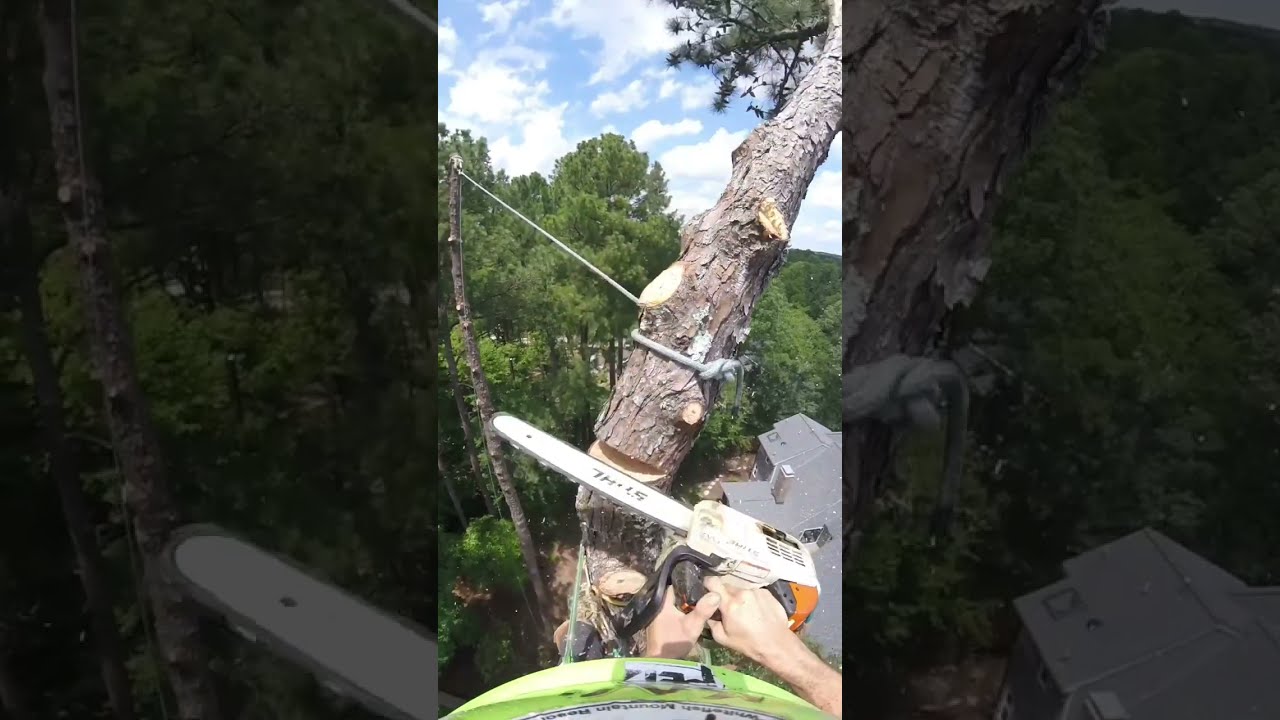
Removing, ringbarking, poisoning or heavily pruning a protected tree without approval can lead to substantial fines and orders to replant or restore the site. Penalties can apply to both the property owner and the contractor carrying out the work. Property owners remain responsible for ensuring approvals are in place, so always ask a tree contractor to confirm that approval has been obtained and that they are fully insured.
Choosing the Right Tree Professional in Wollongong
When selecting an arborist or tree service, look for:
- Formal qualifications, ideally AQF Level 3 for climbing arborists and Level 5 for consulting arborists.
- Current public liability insurance and workers compensation cover.
- Familiarity with Wollongong City Council requirements and local conditions, such as steep escarpment sites and coastal winds.
- A written quote that outlines the scope of work, including clean-up and disposal.
- Willingness to follow Australian Standards and provide documentation for council.
Caring for Significant Trees on Your Property
Protecting a significant tree is easier and cheaper than managing problems later. Schedule regular inspections, especially after storms, which are common along the Illawarra coast. Maintain a layer of organic mulch under the canopy, avoid changing soil levels and don't park vehicles or store materials over the root zone. Watch for warning signs such as dieback, fungal growth at the base, cracks in the trunk, leaning or lifting soil. Early intervention by an arborist can often extend a tree's life and reduce risk.

Final Thoughts
Significant trees contribute to Wollongong's character, biodiversity, cooling shade and property values. Understanding the rules before you act protects both you and the trees. Always confirm requirements with Wollongong City Council, obtain written approval when needed, and use qualified professionals. Regulations and mapping can be updated, so check current information for 2026 and beyond before starting any work.
Wollongong Tree Removal Pros
106 Gipps St, Wollongong NSW 2500
(02) 4210 5945
❧